
Table of Content
Table of Contents
What is an HTML Sitemap?
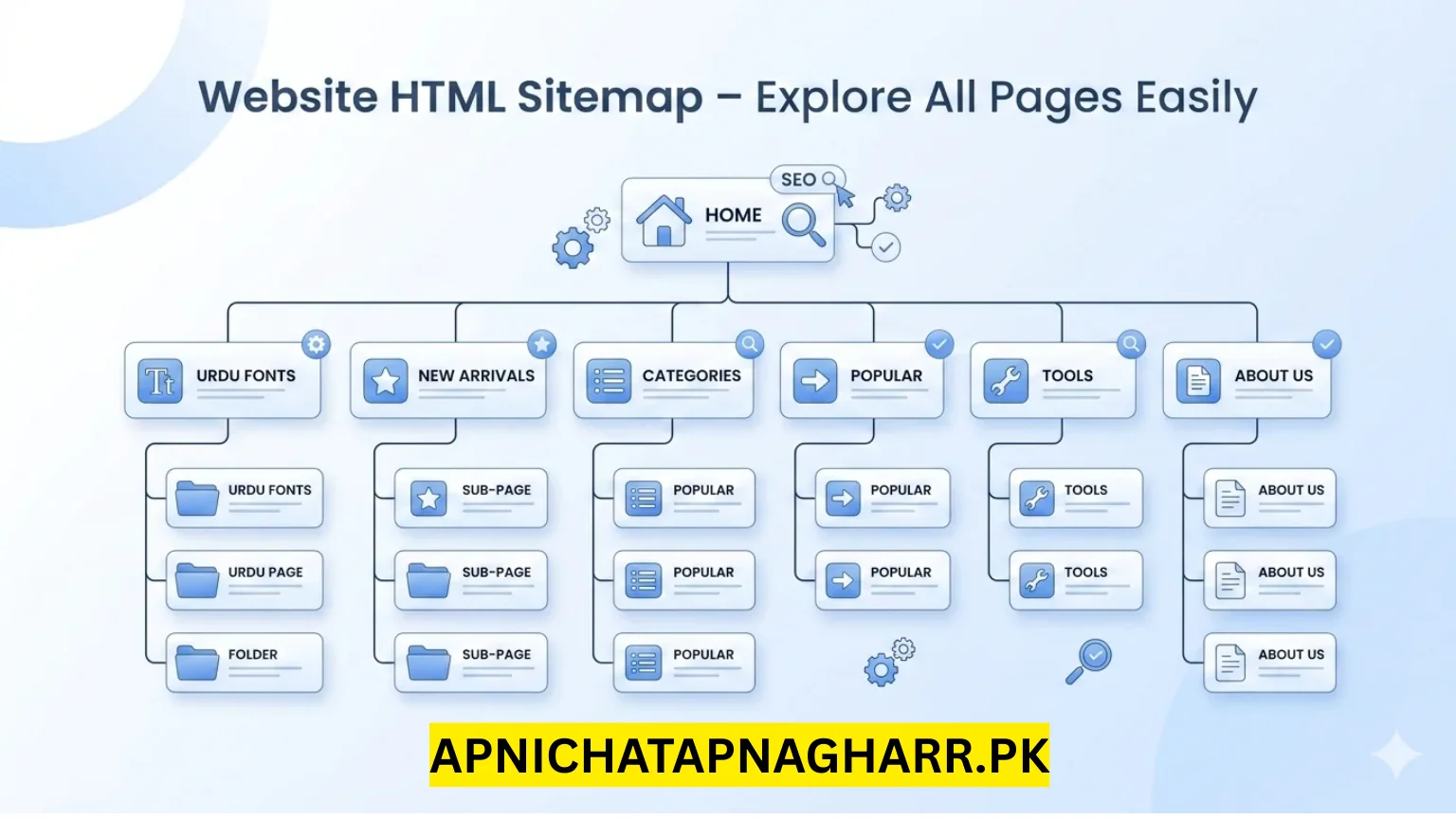
An HTML sitemap is a single webpage on your website that lists all the important pages in an organized, easy-to-read format. Think of it as the table of contents of a book – it shows visitors exactly what content is available on your website and where to find it.
Unlike XML sitemaps which are designed for search engines like Google, HTML sitemaps are created for human visitors. They help users navigate your website easily, especially if your site has hundreds of pages. If someone is looking for a specific article but can’t find it through your main menu, they can simply visit the HTML sitemap and browse through categories.
Why is HTML Sitemap Important for Your Website?
1. Better User Experience
When a website grows to hundreds of pages, it becomes difficult for visitors to find older content. A sitemap organizes everything in one place – by category, date, or topic. This is especially useful for blogs like ours that cover a wide range of topics related to the Apni Chat Apna Ghar scheme.
2. Improved SEO (Search Engine Optimization)
Search engines like Google use sitemaps to discover and index your pages. While XML sitemaps are the primary tool for this, HTML sitemaps also help by providing an additional layer of internal links. Every link on your sitemap passes “link juice” (SEO value) to the pages it points to, helping them rank better in search results.
3. Faster Indexing of New Content
When you publish a new article, adding it to your HTML sitemap ensures that both users and search engine bots can find it quickly. This is especially important for time-sensitive content like scheme deadlines, balloting results, and registration dates.
4. Reduced Bounce Rate
If a visitor lands on your site through a specific article but wants to explore more, they might leave if navigation is poor. A sitemap gives them an easy way to discover related content, keeping them on your site longer and increasing engagement.
5. Accessibility for All Users
Some users prefer browsing through lists rather than using search bars. A well-organized sitemap caters to different browsing preferences and makes your website more accessible to everyone.
6. Clear Website Structure
An HTML sitemap shows both users and search engines how your website is organized. It demonstrates that your site has a logical structure with clear categories and hierarchy, which is a positive signal for SEO.
FAQs for HTML Sitemap Page
What is the difference between HTML sitemap and XML sitemap?
HTML sitemap is designed for human visitors – it’s a beautiful webpage with clickable links organized by categories. XML sitemap is designed for search engines like Google – it’s a code file that tells Google about all your pages, when they were last updated, and how important they are. Both are important for a healthy website.
Why should I visit the HTML sitemap?
You should visit the HTML sitemap if:
You’re looking for an old article but can’t find it in the menu
You want to see all the content available on this website in one place
You prefer browsing through lists rather than using the search bar
You want to explore different categories of the Apni Chat Apna Ghar scheme
How often is this sitemap updated?
We update our HTML sitemap every time we publish new content. Whenever a new article or page is added to the website, it is immediately included in this sitemap. The “Last Updated” date at the bottom shows when the sitemap was most recently updated.
Does the HTML sitemap help with SEO?
Yes, absolutely! HTML sitemaps help with SEO in several ways:
They create internal links to all your pages, passing SEO value
They help search engines discover and index your pages faster
They improve user experience, which is a ranking factor
They show search engines that your website has a clear structure
I can’t find a specific page in the sitemap. What should I do?
If you can’t find what you’re looking for in the sitemap, please:
Use the search bar at the top of the website
Check our blog page for recent articles
Contact us directly via email or WhatsApp
Let us know what information you need – we might create a new article for it!
 Join Channel